
Industrial Remanufacturing vs Ordinary Repair: Why Repair Cannot Replace Remanufacturing?
Introduction
Every fleet relies on ordinary repair to keep trucks rolling. When a component fails, technicians fix or swap the broken part, and the vehicle returns to service. Many fleet managers naturally assume that repeated high-quality repairs can achieve the same result as industrial remanufacturing.
This assumption carries hidden risks. Repair is a reactive fix for a known fault. Industrial remanufacturing is a proactive, whole-vehicle regeneration process that resets asset fatigue and restores near-new OEM performance. Even a series of top-tier repairs cannot replicate the outcome of industrial remanufacturing. This article explains the core gap.
What is Ordinary Heavy Truck Repair?
Ordinary repair is reactive, fault-driven maintenance. It responds to a specific failure, leak, noise or breakdown. The scope is limited exclusively to the faulty component or damaged subsystem. Technicians do not disassemble the entire truck. All other sealed assemblies remain untouched, even if those parts are aging and accumulating hidden fatigue.
Repair’s replacement rule is simple: replace parts only when they show visible damage or proven failure. Components that still function, but are nearing the end of their fatigue life, stay installed. After the repair work, a short functional test confirms the reported issue is resolved. There is no requirement for NDT structural inspection of frame, engine block or axle housings, no full-load performance validation against OEM specifications.
Repair does not erase the truck’s accumulated operating hours, metal stress or internal wear. The vehicle’s aging timeline continues from where it left off. Records are limited to work orders and replaced parts for that single fault. No independent third-party audit is required.
What is REMAN ROAD Industrial Remanufacturing?
industrial reman process is a proactive, gated industrial regeneration workflow applied to pre-qualified heavy truck cores. Before any work begins, the core passes mandatory NDT screening to rule out irreversible cracks, deformation or severe corrosion in critical load-bearing components. Unqualified cores are rejected.
The full truck is completely disassembled down to individual components. All parts are cleaned, inspected and graded as reusable, repairable or scrap. Sound structural castings undergo precision machining to restore OEM dimensional tolerances within allowed stock removal limits.
All fatigue-critical consumable components are replaced with new specification-compliant parts proactively, regardless of visual condition. Bearings, seals, gaskets, brake friction materials, rubber hoses and high-torque fasteners are all renewed before reassembly.
Once rebuilt, sub-assemblies go through bench testing. The fully assembled truck undergoes rigorous full-load road testing to ensure performance meets near-new OEM benchmarks. Every inspection, machining and parts replacement step is logged in a VIN-linked traceability dossier. Final certification is granted only after independent third-party audit. The finished truck achieves near-new reliability and a fully reset service cycle.
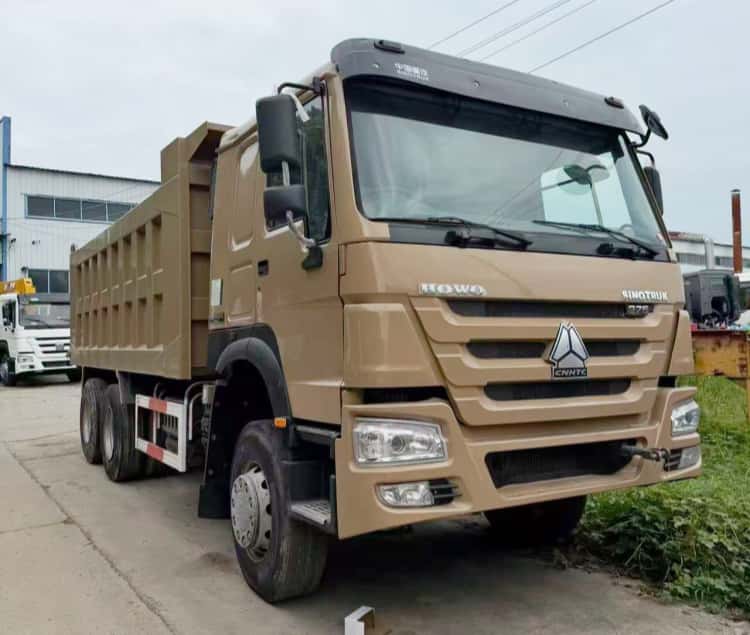
Core Fundamental Differences
Work Philosophy
- Ordinary Repair: Reactive. Fix what has already broken. The goal is to restore basic operability to resolve an immediate breakdown.
- Industrial Remanufacturing: Proactive. Eliminate latent wear and fatigue across the whole vehicle before deployment. The goal is full asset regeneration and lifecycle reset.
Scope of Inspection & Teardown
- Ordinary Repair: Partial teardown only for the failed part. Most assemblies remain sealed. Hidden wear in other systems remains undetected.
- Industrial Reman Process: Full vehicle disassembly. Every single component across chassis, powertrain, brake, steering and cooling systems is inspected.
Component Replacement Strategy
- Ordinary Repair: Replace only failed or visibly defective parts. Aging but working components remain in place, carrying residual fatigue.
- Industrial Remanufacturing: Mandatory proactive replacement of all finite-life fatigue components, to eliminate future mid-service failures.
Structural Validation
- Ordinary Repair: Visual inspection of the faulty area only. No mandatory NDT for frame and major cast components. Hidden structural risks remain.
- Industrial Remanufacturing: Mandatory NDT on critical load-bearing cast and forged components during intake screening. Cores with hidden structural damage are rejected.
Performance Testing
- Ordinary Repair: Simple functional check to confirm the fault is fixed. No full-load OEM benchmark testing.
- Industrial Remanufacturing: Bench dyno testing and full-load road validation to verify near-new OEM performance across all vehicle systems.
Impact on Asset Lifespan
- Ordinary Repair: Fixes one failure. The rest of the truck continues aging. Only limited, partial extension of service life, no full lifecycle reset.
- Industrial Remanufacturing: Resets the entire vehicle’s fatigue profile, delivering a complete new service cycle with new-like reliability.
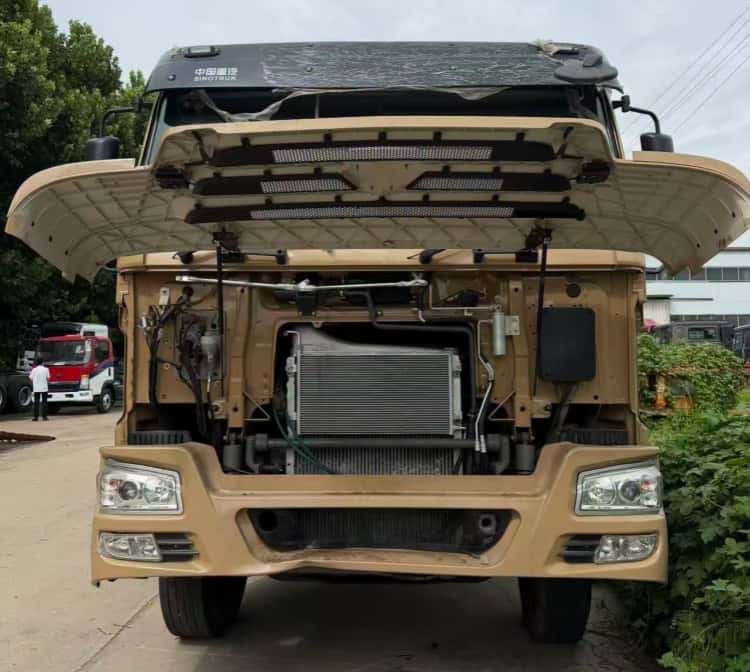
Why Repair Cannot Replace Industrial Remanufacturing?
- Repair leaves hidden fatigue untouched Repair only addresses the symptom. Axles, frame, suspension and other assemblies keep the accumulated stress from thousands of prior operating hours. These latent defects can trigger sudden costly breakdowns after repair, even if the fixed component works perfectly.
- Multiple repairs never equal full system renewal Even if a fleet performs a long list of separate repairs on one truck, these are isolated fixes done at different times. There is no single full teardown and system-wide inspection. Components age unevenly, creating a mix of new, worn and fatigued parts. This hybrid assembly cannot match the consistency of a fully remanufactured truck.
- Repair lacks standardized structural screening Ordinary repair does not require NDT testing. A truck could have invisible cracks in frame or engine block, which no amount of component repair can resolve. Reman’s intake screening eliminates this risk before build starts.
- Repair does not reset the asset’s commercial value A repaired truck retains its original wear history and mileage. Buyers know there is unknown residual risk. Certified remanufactured truck carry full traceability documentation and third-party certification, protecting residual asset value.
- Repair cannot deliver auditable environmental benefits Repair does not include standardized lifecycle accounting. Industrial remanufacturing preserves the embodied carbon of heavy cast components, with traceable records for ESG and Scope 3 carbon reporting, something routine repair cannot support.
Suitable Use Cases
- Ordinary Repair: Best for maintaining your existing fleet. Use it to resolve isolated failures and keep trucks running through their current service cycle. It is cost-effective for day-to-day fleet maintenance.
- Industrial Remanufacturing: Best when you need to create a “like-new” fleet asset for long-term heavy-duty operation. Choose certified remanufactured truck when downtime is extremely expensive, you want predictable maintenance schedules, and you need certified quality and carbon savings.
Common Misconceptions
❌ Myth: If you perform enough major repairs, you can create a remanufactured truck. Fact: Sequential repairs are still patch maintenance. There is no full vehicle teardown, system-wide component grading, mandatory NDT or full performance validation. The asset lifecycle is never fully reset.
❌ Myth: High-quality repair shops can match reman quality at a lower price. Fact: A high-quality repair fixes one problem. It does not inspect and renew every system. The risk of unplanned downtime remains far higher than for certified reman assets.
❌ Myth: If a repaired truck runs well, it has the same reliability as a remanufactured truck. Fact: Short-term drivability does not reveal hidden metal fatigue. A repaired truck may perform fine for months, then suffer catastrophic failure from an uninspected component.
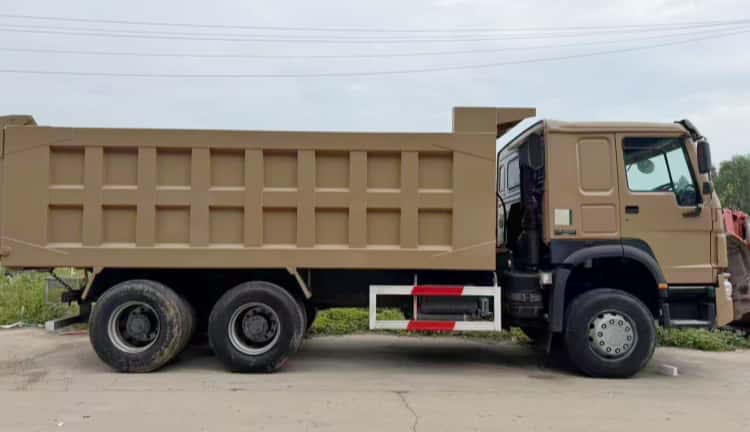
Conclusion
Ordinary repair is an essential tool for fleet maintenance, but it cannot replace industrial remanufacturing. Repair reacts to failures and fixes individual broken parts, while industrial remanufacturing is a comprehensive whole-vehicle industrial reman process that screens, disassembles, renews, tests and certifies the entire truck to reset its service life.
For fleet procurement and long-term asset planning, it is critical to distinguish the two. Relying on repair to achieve the same outcomes as industrial remanufacturing underestimates structural risks, downtime exposure and total ownership costs.