
Why Remanufactured Trucks Are the Future of the Heavy Truck Industry?
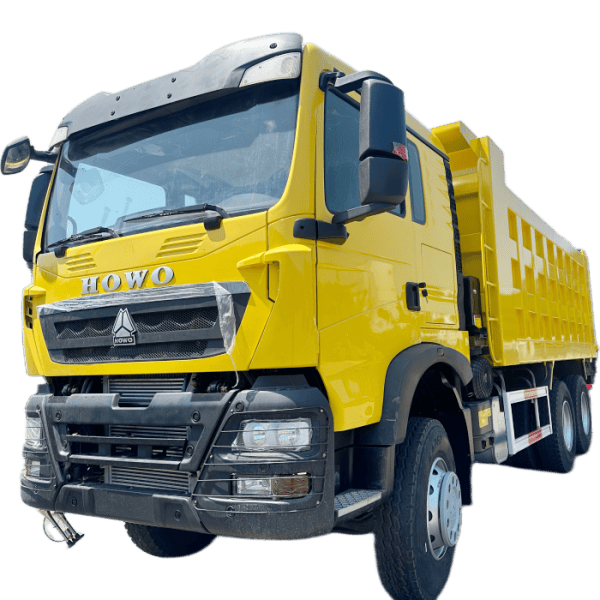
Remanufacturing Is the Core Engine of Heavy Truck Circular Economy
Heavy-duty truck remanufacturing is not a simple second-hand vehicle renovation business. It is a systematic circular economy engineering system integrating environmental protection, economy, industrial optimization and sustainable development. By restoring OEM-level performance, truck remanufacturing realizeszero-degradation reuse of industrial assets, low-carbon iteration of the supply chain, and low-cost renewal of fleet resources. It will continue to lead the sustainable development of the global heavy truck industry and become the most reliable circular solution for global engineering and logistics fleets.
Table of Contents
- Industry Background: The End of the Traditional Linear Truck Model
- Policy Trend: Global Carbon Neutrality and Circular Economy Mandate Remanufacturing
- Market Trend: Fleets Shift From “New Truck Dependence” to “Asset Regeneration”
- Industrial Trend: Remanufacturing Standardizes the Global Second-Hand Truck Ecosyst
- REMAN ROAD: Brand Positioning, Core Standards & Development Vision
Related Articles
- Core Essence of Remanufacturing: Full Restoration to OEM Original Performance
- What Defines a True Reman Truck?
- Why Remanufactured Trucks Are the Future of the Heavy Truck Industry?
- Industrial Remanufacturing Resets the Full Vehicle Life Cycle
- The Circular Economy Value of Truck Remanufacturing
- ESG and Compliance Value of Reman Trucks: Meeting Global Sustainable Standards
Industry Background: The End of the Traditional Linear Truck Model
The global heavy truck industry has long relied on a linear economic model: manufacturing new vehicles, short-cycle usage, and large-scale scrapping.
In recent years, soaring raw material prices, tight new truck production capacity, prolonged delivery cycles, and stricter environmental regulations have completely broken the old industry logic.
Purely purchasing brand-new trucks can no longer meet fleet expansion, asset renewal and sustainable operation needs.
Under this industry transformation, standardized industrial remanufacturing has emerged as the core future development direction.
New Truck Costs Continue to Rise Globally
- Steel, engine core parts and manufacturing labor costs keep rising year by year, pushing the overall pricing of new heavy trucks to a high level.
- For logistics fleets, mining contractors and engineering enterprises, large-scale new truck procurement brings huge capital pressure and low asset turnover efficiency, forcing the industry to seek high-quality alternative solutions.
Global New Vehicle Supply Chain Is Unstable
- Affected by core component shortages, factory production limits and international logistics fluctuations, new heavy truck delivery cycles are frequently delayed.
- Many project owners face construction delays and fleet scale limitations due to insufficient new truck supply, making flexible and efficient asset renewal extremely important.
Traditional Used Truck Markets Are Chaotic and Uncontrollable
- Ordinary refurbished trucks and randomly repaired second-hand trucks have no unified performance standards, unstable quality and unknown hidden risks.
- They cannot support large-scale standardized fleet operation, nor can they meet modern industrial safety, energy-saving and compliance requirements.
- The market urgently needs a standardized and reliable regeneration system.
Policy Trend: Global Carbon Neutrality and Circular Economy Mandate Remanufacturing
Global environmental policies and circular economy strategies are accelerating the elimination of backward low-end renovation models and strongly supporting formal industrial truck remanufacturing. Remanufacturing is no longer an optional business, but a policy-guided industrial trend.
Carbon Reduction Policies Restrict Blind New Manufacturing
- In order to achieve carbon neutrality goals, countries and international organizations have continuously introduced energy consumption and carbon emission constraints on heavy manufacturing industries.
- New truck manufacturing consumes massive energy and resources, while OEM-level remanufacturing greatly reduces carbon emissions and resource waste, fitting perfectly with global low-carbon development strategies.
Circular Economy Regulations Advocate Asset Reuse
- International ELV directives, extended producer responsibility systems and green industrial policies all encourage high-value reuse of end-of-life equipment.
- Remanufacturing, as the highest-level form of resource recycling, replaces simple scrapping and material melting, becoming the mainstream policy-supported technical path.
ESG Compliance Becomes a Corporate Hard Threshold
- More international tenders, engineering projects and corporate supplier assessments take ESG performance as a core evaluation indicator.
- Remanufactured trucks can provide verifiable carbon reduction data, standardized safety records and sustainable asset management capabilities, helping enterprises pass green audits and project qualification reviews.
Market Trend: Fleets Shift From “New Truck Dependence” to “Asset Regeneration”
Global fleet operation logic is undergoing a fundamental shift. Instead of blindly pursuing brand-new vehicles, buyers are starting to focus on comprehensive performance, operational stability and full-life-cycle cost performance, making remanufactured trucks highly favored in the market.
Ultra-High Cost-Performance Solves Fleet Capital Pressure
- OEM-level remanufactured trucks achieve new-vehicle equivalent power, safety and reliability at 50–70% of the new truck price.
- Fleets can complete asset expansion and equipment renewal with lower investment, greatly improving capital utilization rate and overall profitability.
Stable Performance Meets Industrial Heavy-Duty Working Conditions
- Genuine remanufacturing completely eliminates mechanical wear, performance attenuation and hidden faults of old vehicles.
- Restored to factory-level standards, remanufactured trucks can adapt to long-term, high-load and complex working conditions such as mining, earthwork and long-haul logistics, fully meeting industrial production demands.
Predictable Full-Life-Cycle Operation
- Different from uncertain refurbished trucks, standardized remanufactured trucks have fixed performance indicators, stable failure rates and predictable service life.
- Fleets can accurately plan maintenance cycles, control operating costs and realize refined fleet management.
Industrial Trend: Remanufacturing Standardizes the Global Second-Hand Truck Ecosystem
The future heavy truck industry will form a dual pattern of “new truck manufacturing + remanufactured truck regeneration”. Remanufacturing will completely reshape the disorderly second-hand truck market and build a standardized, transparent and sustainable industrial ecosystem.
Eliminate Industry Chaos of Empirical Renovation
- Traditional second-hand truck transactions rely on manual experience and lack unified technical standards.
- Industrial truck remanufacturing takes OEM performance as the only benchmark, realizes standardized production, testing and filing, and completely eliminates uneven quality in the market.
Form a Complementary Supply Chain System
- Remanufactured trucks make up for the shortage of new truck supply, provide fast delivery and flexible procurement solutions for global fleets, and form a stable dual supply system for the heavy truck industry.
Promote Long-Term Sustainable Industrial Development
- Remanufacturing maximizes the reuse value of industrial assets, reduces resource consumption and environmental pressure, and realizes coordinated development of economy, environment and industry, which is the only sustainable long-term development model for the heavy equipment industry.
REMAN ROAD: Brand Positioning, Core Standards & Development Vision
REMAN ROAD take remanufacturing technology, standardized process system and quality control as the core, and heavy-duty equipment regeneration as the landing carrier, committed to solving the long-standing quality chaos and cost risks in the global engineering equipment renewal market.
Accurate Brand Positioning
- REMAN ROAD is a standard‑oriented industrial remanufacturing enterprise, not a vehicle sales dealer or equipment refurbishment workshop.
- Our core competitiveness lies in defining, practicing and popularizing measurable OEM‑aligned remanufacturing benchmarks, quality evaluation criteria and full‑lifecycle asset management specifications.
- We focus on establishing unified evaluation dimensions for the disordered global heavy‑duty equipment reman sector, guiding the industry away from superficial cosmetic refurbishment and experiential repair models.
- By setting transparent, replicable reman standards, we help global engineering fleets identify qualified regenerated assets, and build a reliable connection between green circular‑economy concepts and practical fleet‑asset value improvement.
Core Brand Principles
- Standardization First, Reject Fake Reman: Always take OEM industrial technical standards as the only implementation basis, completely abandon empirical renovation and superficial refurbishment, and ensure every regenerated unit reaches near-new performance indicators.
- Technology-Driven Regeneration: Rely on professional disassembly, cleaning, fatigue elimination, precision repair and calibration technology to realize essential performance regeneration of industrial equipment, not simple part replacement.
- Full Transparent Quality Traceability: Implement full-process file archiving for all reman projects, realize visible and verifiable restoration process, and solve the information asymmetry pain point in the global second-hand engineering equipment trade.
- Customer Value-Centric: Take reducing fleet full-lifecycle cost, eliminating operational safety risks and improving asset return rate as the core goal, providing stable, reliable and cost-effective reman asset solutions.
Brand Vision & Mission
- Brand Mission: Standardize global industrial equipment remanufacturing, empower global buyers with low-cost, low-risk and high-value circular asset solutions.
- Brand Vision: Become a global benchmark brand for standardized industrial remanufacturing, promote the iterative upgrade of the heavy equipment reman industry from extensive renovation to standardized technical regeneration, and lead the healthy development of the global green circular equipment economy.
- Core Competitive Advantage: REMAN ROAD’s core advantage is standardized industrial reman system. From core vehicle screening, process implementation, performance testing to after-sales guarantee, we form a closed-loop quality system, enabling global customers to obtain new-grade equipment quality at a reasonable cost and truly realize “cost reduction, risk reduction and efficiency improvement.