Brake System Remanufacturing: Rebuild Factory-Level Safety Performance
Intro
The brake system is the primary safety boundary of heavy transport assets. A simple brake overhaul may fix spongy pedals or visible air leaks, but it rarely recovers the original factory-level braking balance, heat resistance and stopping power. For genuine brake system remanufacturing, the brake system is not treated as a secondary auxiliary assembly. It is a standalone safety-critical module that must meet OEM performance benchmarks before the truck is approved for service. Uneven braking, faded stopping force under sustained load and delayed response are silent hazards that often go undetected in empty test drives.
Core disassembly and full precision cleaning
Every brake component is completely disassembled, rather than just servicing the externally visible parts.
- Air chambers, brake calipers, slack adjusters, brake drums or rotors, S-cams, bushings and brake shoes are separated individually.
- Compressed air passages, valve bodies and internal cavities go through precision cleaning to remove old grease, brake dust, moisture residue and corrosion deposits.
- Contaminants trapped inside valves or chamber housings can cause slow response, sticking valves or uneven air distribution, which directly break brake balance.
Only after full cleaning can inspectors carry out reliable dimensional and fatigue checks.

Dimensional screening and NDT for load-bearing brake parts
Brake drums and rotors are measured for thickness, runout, taper and surface crack indications. They also receive NDT checks to uncover thermal fatigue cracks generated from repeated heavy braking. If wear exceeds the OEM discard limit or thermal cracks are detected, the part must be replaced. Machining is only permitted within the OEM maximum allowable cut depth. Over-machined drums or rotors lose thermal mass; they heat up fast and suffer severe brake fade during long downhill runs.
S-cam shafts, support brackets and caliper housings are also checked for bending, journal wear and hidden fatigue cracks. Even minor deformation of the cam shaft leads to uneven shoe contact and irregular braking force across wheels.
Mandatory renewal of high-cycle wear components
All sealing and consumable safety parts follow mandatory replacement rules, regardless of visual condition. This includes brake chamber diaphragms, all seals, O-rings, shoe return springs, roller bushings, friction linings and slack adjuster internal components. These parts degrade internally from heat cycling and pressure fluctuations, and their remaining service life cannot be judged by appearance. Reusing ageing diaphragms and springs is a common market shortcut. It may work fine at low usage, but sudden brake failure or slow brake release can occur under heavy continuous braking.
Friction material is matched to the OEM specification grade. Low-grade aftermarket linings compromise friction stability, heat resistance and wear rate, even if they fit the shoe physically.
System calibration and air circuit tuning
Brake performance depends on balance across all axles, not individual wheel function. Technicians calibrate slack adjusters, set pushrod travel and adjust brake chamber stroke to OEM values. Relay valves, quick-release valves, ABS modulators and pressure regulators are flow-tested and calibrated to maintain matched air pressure timing between front and rear axles. The goal is synchronized braking force distribution. Poor calibration causes one axle to lock prematurely, triggers unstable skidding, uneven lining wear and higher tyre damage risk.
For ABS-equipped systems, sensor gaps, signal output and modulator response are fully verified. A reman brake system with uncalibrated ABS cannot deliver the designed anti-lock protection.
Bench and loaded functional validation
Static air leak testing and empty pedal checks are only preliminary steps. The completed brake system is validated under simulated loaded conditions. Inspectors test response speed, air holding pressure, release time and stopping balance under rated load.
Thermal cycling tests are performed to check for brake fade after repeated braking. If there is pressure drift, cross-axle force imbalance or abnormal heat build-up, the system is disassembled and re-calibrated. Only units with stable, balanced braking performance pass this safety gate.
Traceability and marking for compliance audit
All brake system remanufacturing test results, component serial numbers, calibration parameters and inspection records are logged and bound to the chassis VIN. Safety-related brake records are preserved in the permanent traceability package.
This supports fleet safety audits, regulatory inspection and cross-border customs compliance. Buyers can verify that the brake system has not been patched with makeshift adjustments.
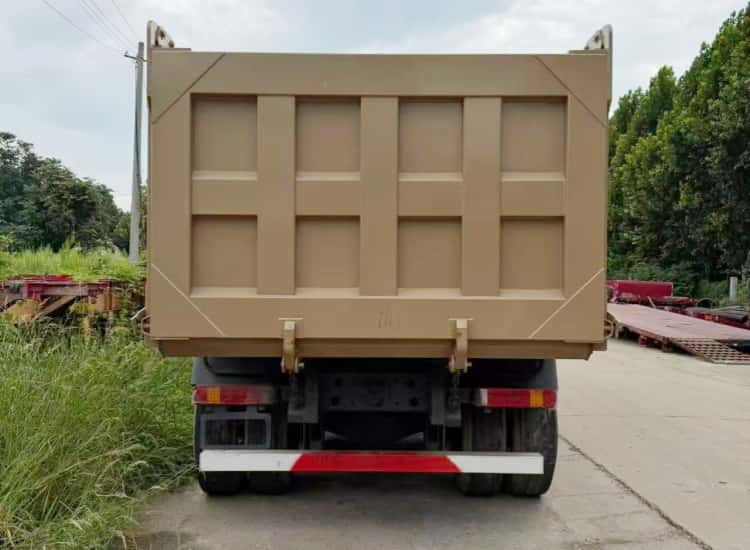
Common market risks from incomplete brake reman
Many refurb operations only replace worn brake pads and fix air leaks. They skip NDT on drums/rotors, reuse old diaphragms and do not calibrate axle-by-axle brake balance. These trucks may pass a simple road test unladen.
Once loaded on long downhill routes, brake fade, pulling and intermittent air leakage emerge, creating major safety risks for drivers and cargo. Safety shortcuts on brakes are the most dangerous type of fake reman compromise.
Final Takeaway
Factory-level brake performance relies on full disassembly, fatigue screening, rule-based renewal of consumable safety parts, precise air circuit calibration and loaded thermal validation. Genuine brake system remanufacturing does not merely make the brakes stop the truck. It restores balanced, predictable, heat-resistant braking performance matching OEM design intent. Any reman truck without complete brake system inspection and load test records carries unacceptable safety risk for fleet operation.