Engine Remanufacturing: How to Restore OEM Power Performance?
Intro
Many engine overhauls only target stopping oil leaks and rough idle. They may get the engine running again, but fail to bring back the original power band, torque stability and fuel consumption level defined by the OEM. Genuine engine remanufacturing is different. Its goal is to restore the engine’s designed performance envelope, not just basic function. Every genuine engine remanufacturing step follows OEM specifications, from core screening to final dyno testing. This is the reason a certified reman engine can deliver consistent output for logistics and construction fleets, rather than operating as a weakened, compromised unit.
Core screening: rule out engines with irreversible metallurgical damage
The power recovery process starts before disassembly. Service history is reviewed to flag prior overheating, hydraulic oil ingestion, severe overspeed or seizure events. These incidents can leave permanent harm: distorted cylinder blocks, cracked decks, softened crankshaft journals or damaged valve seats. Even if the engine can be reassembled, residual metallurgical damage will limit power and trigger repeated failures.
After teardown and precision cleaning, every major casting and rotating assembly goes through NDT and hardness checks. Blocks with deep cracks, cylinder heads with permanent warpage or crankshafts with fatigue indications are rejected directly. Only cores with intact base metallurgy qualify for genuine engine remanufacturing and power restoration.

Dimensional control to recover compression and sealing foundation
Power loss often traces back to invisible dimensional drift. Cylinder bore taper, out-of-round distortion, crankshaft journal runout and valve guide clearance all affect compression, blow-by and combustion stability. Technicians measure all critical dimensions against OEM tolerances. Within the permitted stock removal range, cylinder bores are honed, crankshaft journals are ground, and valve seats are re-cut. If wear exceeds the OEM rework limit, the component is replaced instead of machined.
Precision geometry ensures consistent compression pressure across all cylinders. Uneven cylinder compression is one of the most common causes of weak low-end torque, power drop under load and excessive fuel burn.
Matching internal clearances to OEM design specs
Clearances are not set by experience. Bearing clearance, piston ring end gap, valve lash, injector protrusion and fuel pump timing are all calibrated to OEM values. Tight clearances lead to thermal binding and seizure risk; loose clearances create blow-by, oil contamination and power decay. For heavy-duty engines, these gaps directly shape torque delivery at low and mid RPM, which matters most for loaded hauling and climbing.
During assembly, all torquing sequences and torque values follow the OEM service manual. Uneven clamping force on cylinder heads distorts the bore and breaks combustion sealing, which undermines power immediately after rebuild.
Fuel and air system calibration for original combustion balance
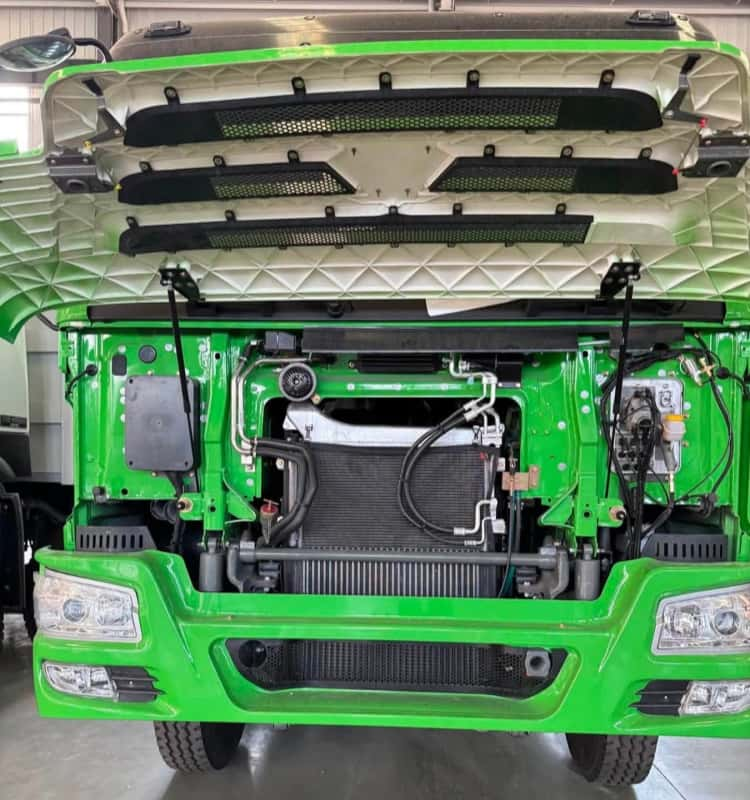
Mechanical geometry alone cannot restore OEM power. Combustion harmony relies on matched fuel and air delivery. Injectors are flow-tested, rebuilt or replaced to meet OEM spray pattern and delivery volume standards. Turbocharger assemblies are inspected, balanced and calibrated to deliver the designed boost curve. Air intake, intercooler and exhaust pathways are checked for leakage or restriction.
A common shortcut in low-grade refurbishment is reusing worn injectors or untested turbos. The engine may run, but it cannot build full boost, suffers delayed torque response, and burns extra fuel under heavy load.
Dyno testing: the objective verification gate
Idle checks and road test runs are not enough to confirm power recovery. Genuine engine remanufacturing requires controlled dynamometer testing. The engine is run through a standardised test cycle that maps power, torque, boost pressure, exhaust temperature and fuel consumption across the full RPM range. The measured curve is compared against the OEM published performance curve.
If power or torque falls outside the acceptable deviation window, the engine is pulled back for troubleshooting. Common corrective actions include rechecking injector flow, re-calibrating timing, fixing boost leaks or correcting valve seating. Only reman engines that match the OEM performance benchmark pass and move into vehicle assembly.
Critical distinction: restore OEM performance vs “just runnable”
Many market rebuilds stop once the engine starts and does not smoke. They skip dyno validation, use oversized clearances to extend component life, and accept reduced power as a trade-off. For fleet operators, this creates hidden losses: slower climbing speed, longer cycle times, higher fuel bills and more stress on driveline parts.
Genuine engine remanufacturing does not de-rate the engine by default. Its performance target is the original OEM rating, unless the full vehicle duty envelope assessment requires a deliberate, documented de-rating for chassis safety reasons.

Final Takeaway
Restoring OEM engine performance depends on a complete chain of controls: metallurgical core screening, dimensional recovery within OEM rework limits, precision clearance setting, balanced fuel-air combustion tuning and formal dyno validation. A reman engine without dyno power data may start reliably, but it cannot prove it delivers the power and torque your fleet counts on.