
Why OEM-Level Performance Is the Only Standard for Qualified Remanufacturing?
Introduction
Many heavy truck rebuild workshops set loose, minimal performance targets: as long as the engine starts, the truck drives, and there are no obvious leaks, the job is considered complete. This low bar leads to assets with weak power, poor fuel economy, overheating issues and short service lives.
For qualified remanufacturing, however, OEM-level performance is not an optional upgrade — it is the baseline requirement. REMAN ROAD defines genuine remanufacturing around restoring the vehicle to meet original equipment manufacturer performance specifications. This article explains why OEM benchmarks are the only valid standard for certified reman heavy trucks.
What Does OEM-Level Performance Mean for Reman Trucks?
OEM-level performance means the reman truck and its individual assemblies must match the original factory design specifications of that truck model. This covers measurable, quantifiable parameters: engine power and torque output, fuel consumption rate, compression pressure, cooling capacity, braking distance, transmission shift characteristics, axle load capacity, emission parameters and thermal stability under full rated load.
It is not just “good enough to drive”. Every key metric must fall within the OEM published tolerance range. Testing must happen under controlled, full-load conditions, not just idle or light road cruising.

Core Reasons OEM-Level Performance Is Mandatory for Qualified Reman
OEM specs are the original engineered design envelope
Heavy trucks are engineered to handle defined gross vehicle weights, continuous loads, operating temperatures and stress cycles. Every component’s size, material and clearance is calculated by the OEM for a specific performance target and service life.
If reman works only restores partial performance, the vehicle operates outside its original design window. For example, an engine with reduced power will be forced to run at higher RPM under hauling loads. This creates extra heat and stress, accelerating component wear, shortening service life and raising failure risk. Only meeting OEM performance ensures the truck operates within its original design limits, supporting a full asset life reset.
It guarantees predictable service life and reliability
The OEM service cycle prediction is built around the vehicle running at rated OEM performance. When reman components meet OEM specifications, wear rates return to the same curve as a brand-new truck. Maintenance intervals can be planned reliably, and the full reset service cycle can be realized.
Low-standard rebuilds that miss OEM benchmarks may run, but their wear rate is accelerated. Fleets face premature failures, unexpected breakdowns and costly downtime. Without OEM-level validation, there is no way to confirm the asset can complete its full intended reman service cycle.
Consistent performance protects fleet operational safety
Heavy trucks carry heavy cargo on long-distance, often rugged routes. Braking power, steering response, thermal stability and load handling are safety-critical. OEM standards define minimum safety performance thresholds. A rebuilt truck with degraded braking performance or insufficient cooling may pass a simple visual inspection, yet fail under heavy load or high ambient temperature, such as hot and dusty African road environments. OEM-level testing verifies safety systems perform as originally designed under real working loads, reducing accident risk.
Creates a neutral, comparable benchmark for buyers
Without OEM performance standards, every remanufacturers uses their own subjective definition of “good quality”. One vendor’s definition of acceptable power may differ wildly from another. This makes comparing quotes nearly impossible for fleet buyers.
OEM specifications are publicly defined, fixed, model-specific metrics. REMAN ROAD uses these objective benchmarks as universal evaluation criteria. Fleet operators can add OEM performance test reports directly into RFQ and contract requirements, removing subjective marketing claims from remanufacturers evaluations.
Validates that reman machining and component replacement were done correctly
OEM performance test results act as a final proof of quality for the entire reman works. Even if a shop completes full disassembly and part replacement, poor machining tolerances, improper assembly or calibration errors will show up during dyno and full-load road testing. If power, fuel consumption or thermal performance cannot hit OEM tolerances, the build is rejected and reworked.
Performance testing is the quality gate that catches hidden assembly defects that visual inspection alone cannot detect.
Supports residual asset value and credible certification
Certification and residual value rely on verifiable proof of quality. A reman truck with documented OEM-level performance test results carries objective evidence of its quality. This documentation becomes part of the VIN-linked traceability dossier.
When reselling the asset later, buyers trust OEM performance records far more than seller verbal promises. Without OEM-level validation, reman certification becomes nothing more than self-issued marketing paperwork.
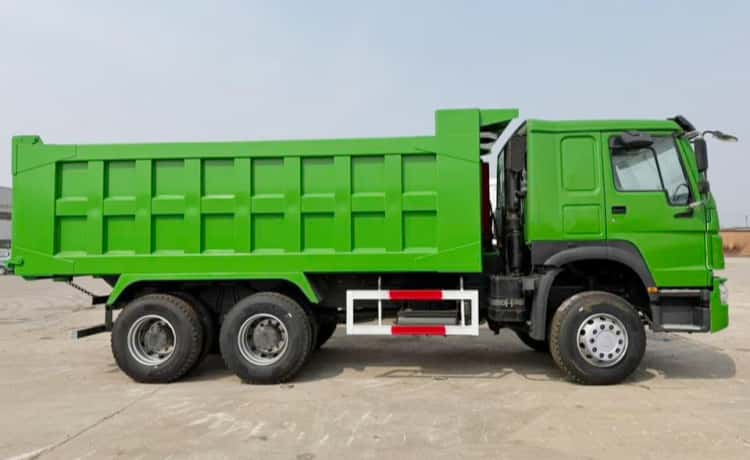
The Risk of Accepting Lower “Good Enough” Standards
Many remanufacturers offer refurbished trucks with a lower standard: “operational performance”. These vehicles can drive, but they carry multiple downsides:
- Higher fuel consumption compared to OEM benchmarks, increasing recurring operating cost
- Reduced pulling power, limiting usable cargo load
- Higher operating temperatures leading to accelerated wear
- Unpredictable breakdown risk during heavy hauling
- Poor resale value, as buyers recognize performance is below factory specs
This is the critical distinction: operational drivability ≠ OEM-level performance. Drivability only proves the vehicle can move. OEM-level performance proves it can work continuously under its rated design load for its full service cycle.
OEM-Level Reman vs Overhaul / Refurbishment
- Overhaul: Usually targets restoring basic operability for one assembly, rarely full OEM performance verification.
- Refurbishment: Focused on appearance and fixing obvious faults, no requirement to meet OEM power, fuel and load specs.
- REMAN ROAD qualified remanufacturing: Must pass bench and full-load testing to meet OEM performance tolerances across all systems, as a mandatory condition for certification.
Common Misconceptions
❌ Myth: Reman trucks do not need OEM-level specs, they just need to run. Fact: “Running” is a minimal threshold. Only OEM-level performance ensures the truck works within the original engineering design and delivers the promised full reset service life.
❌ Myth: Slight deviations from OEM specs are harmless for fleet work. Fact: Small performance deviations compound under continuous heavy load, increasing heat, stress and wear. Over time, minor performance gaps lead to premature component failure.
❌ Myth: OEM standards only apply to brand-new trucks. Fact: OEM design specifications define how that vehicle model was engineered to perform. Qualified remanufacturing’s core principle is restoring the asset back to that original engineered performance window.

Conclusion
OEM-level performance is the only reliable standard for qualified remanufacturing. OEM specifications represent the original engineered design limits for power, safety, fuel efficiency and durability. Meeting these metrics validates the reman build quality, enables full asset life reset, provides objective procurement benchmarks and protects fleet safety, TCO and residual asset value.
Any rebuild that does not verify OEM-level performance under full load cannot be classified as genuine qualified remanufacturing, no matter how complete the teardown or how new the cosmetic finish.