Green Procurement Trends in Global Engineering Projects
Introduce
Large-scale engineering projects — including mining development, road and bridge construction, energy infrastructure and overseas EPC contracts — are rapidly reshaping procurement rules. Traditional tender evaluation used to prioritise upfront price, delivery cycle and basic technical compliance. Today, owners, financiers and multilateral development institutions are embedding green criteria directly into bidding documents.
Green procurement is no longer an optional bonus; it is a threshold qualification. Standard remanufacturing represented by REMAN ROAD fits into this shift, offering contractors a compliant, auditable pathway for heavy mobile assets. This article unpacks the core trends and their practical impacts on heavy vehicle sourcing.
ESG threshold requirements are moving from bonus points to pass/fail gate
The most fundamental shift is that sustainability requirements are becoming pre-qualification filters.
- Previously, green measures earned extra evaluation points. Now many project owners require bidders to demonstrate their supply chain can meet defined ESG standards before technical and commercial proposals are reviewed.
- Lenders such as development banks and sustainable financing institutions conduct independent ESG due diligence. Failure to provide evidence for asset circularity, pollution control or safety governance can lead to bid disqualification or loan suspension.
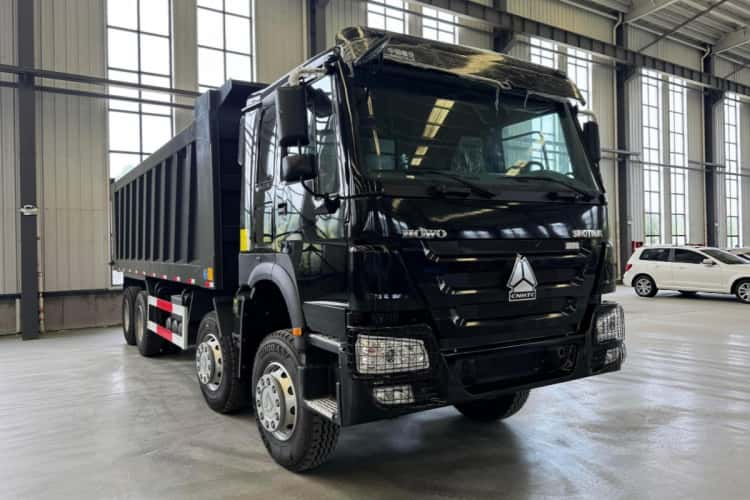
- For heavy truck fleets deployed on-site, this means suppliers cannot rely on generic used trucks or informally refurbished units. Buyers increasingly ask for traceability, third-party verification and clear differentiation between remanufacturing, overhaul and refurbishment.
- REMAN ROAD’s VIN-linked audit package provides a standardised response: contractors can submit core screening records, NDT reports, component grading logs and full-vehicle validation certificates as tender supporting materials.
Circular economy and waste hierarchy are written into technical specifications
Global engineering procurement is adopting the waste hierarchy principle: prevention and reuse sit above recycling and disposal.
- Project specifications now explicitly prefer assets that extend core service life, retain embedded material value and divert equipment from end-of-life waste streams such as ELV.
- Buyers are learning to distinguish genuine lifecycle reset from superficial renovation. Many tender templates now prohibit vendors from labelling refurbished or patched rebuilt trucks as remanufactured for sustainability scoring.
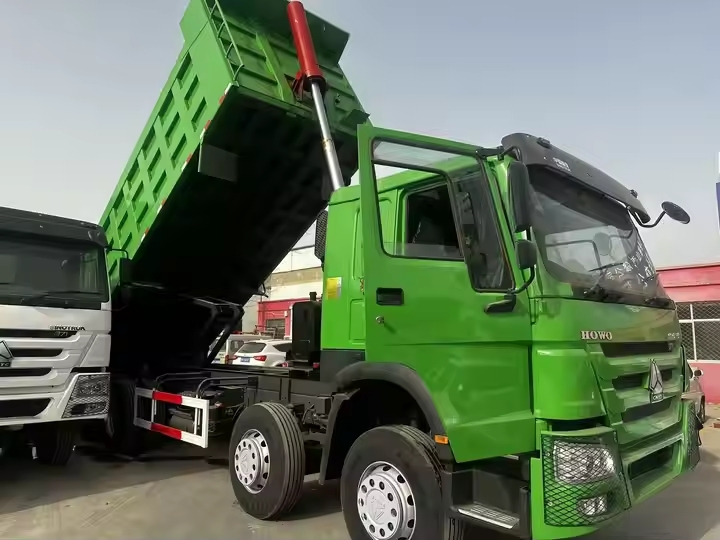
- For contractors, this creates a procurement dilemma: new trucks carry high embodied carbon and higher CAPEX, while low-standard rebuilt assets fail ESG audits. Certified whole-vehicle reman fills this middle tier.
- The green procurement trend is particularly obvious in cross-border projects in Central Asia, Africa and Southeast Asia, where asset turnover is fast and informal dismantling and dumping of old heavy vehicles is a recognised environmental risk.
Scope 3 embodied carbon has become a key evaluation indicator
Green procurement is expanding beyond Scope 1 on-site fuel emissions to upstream capital goods emissions under Scope 3.
- Project owners require bidders to disclose the carbon footprint of major purchased equipment, not only site operation emissions. Heavy-duty trucks are high-impact capital goods with large embodied carbon from steel, casting and OEM manufacturing.
- Tender evaluators compare avoided embodied carbon when contractors select certified reman assets instead of equivalent new trucks. Valid comparison requires a consistent baseline and auditable retention rate of original core structure.
- Informal rebuilds cannot support this calculation because there is no fixed rule for retained mass, replaced parts or remaining service life. Their carbon claims are rejected during assurance.
- REMAN ROAD’s standard remanufacturing workflow enables consistent LCA calculation, which contractors can embed into their environmental management plan and carbon reporting annex for the tender.
Supplier governance and anti-greenwashing clauses are tightening
Procurement teams are adding strict clauses to prevent unsubstantiated sustainability marketing.
- Contracts now include verification rights: the owner or its appointed auditor can inspect supplier process records, trace individual equipment by VIN, and cross-check component disposition.
- Greenwashing indemnity clauses are becoming common. If sustainability claims are later proven unsupported, the contractor may face liquidated damages, suspension of payment or reputational impact on future bidding.
- This pushes contractors to select suppliers with independent third-party audit mechanisms, rather than vendors who provide only self-declared sustainability certificates.
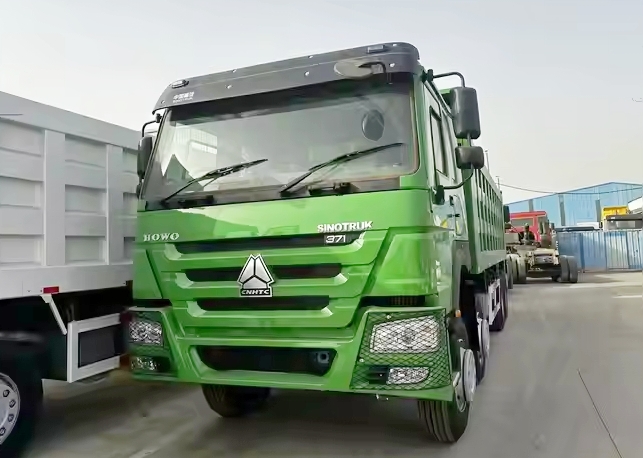
- For heavy truck procurement, this trend favours frameworks with shared terminology, fixed process gates and independent validation, such as REMAN ROAD. It reduces the contractor’s supply chain governance risk.
Cross-border regulatory alignment: ELV, EPR and roadworthiness harmonisation
Many international engineering projects are subject to overlapping regional rules, even when the construction site is outside the EU.
- Projects funded by European capital often follow ELV waste classification logic, EPR principles and CSRD-style disclosure expectations, regardless of the host country’s local vehicle law.
- This creates complexity for mobile heavy assets: a truck acceptable for registration in the host market may still fail the financier’s circularity classification if it cannot prove it is a reman core rather than waste.
- Green procurement therefore prioritises assets with globally consistent definition and traceability, to avoid being trapped between local roadworthiness rules and investor sustainability requirements.
- Standard remanufacturing provides a clear classification boundary: eligible core intake, documented reset process, and separate handling for cores that fail screening and enter formal recycling.

Total Cost of Ownership (TCO) replaces lowest upfront price
Lowest-price bidding is gradually being replaced by life-cycle cost evaluation in mature green procurement systems.
- Evaluators compare not only purchase price, but expected fuel consumption, maintenance frequency, downtime risk, remaining service life and end-of-life treatment liability.
- OEM-aligned certified reman trucks have predictable performance, matching new-truck fuel and emission baselines. Their maintenance schedule, spare part compatibility and warranty terms are quantifiable in TCO models.
- Refurbished assets carry hidden uncertainty: unknown residual fatigue, inconsistent fuel consumption and unpredictable breakdown risk. These liabilities are hard to price and can erode project profitability.
- For the contractor, selecting standard remanufacturing balances CAPEX pressure, ESG scoring and operational stability, which is a major advantage in long-duration infrastructure and mining projects.
Local industrial development and inclusive circular supply chain requirements
A newer trend in international engineering procurement is the requirement for local value creation.
- Many host governments require contractors to support local circular industries, rather than only importing brand-new equipment or dumping end-of-life machinery locally.
- Procurement documents may award points for using local qualified reman partners, core collection systems and regulated dismantling capacity.
- REMAN ROAD’s open standard remanufacturing can help local reman workshops adopt unified process and verification rules, enabling them to qualify as approved suppliers for global EPC contractors.
- This aligns green procurement with social development targets: building local service capacity, creating skilled jobs and reducing informal scrap dumping in project regions.
Practical limits contractors need to recognise
Green procurement trends create opportunities, but they also have clear boundaries.
- Remanufactured heavy trucks are not automatically accepted by every tender. Some owners still specify brand-new equipment for high-risk core operations. Contractors must read pre-qualification clauses carefully.
- Certification alone cannot replace local roadworthiness inspection, registration requirements and emission compliance in the project host country.
- Green scoring rules vary by financier and owner. A carbon methodology accepted by one project may not be recognised by another. Contractors should pre-align their calculation approach with the tender’s evaluation criteria.
Closing Summary
Green procurement in global engineering projects is shifting from symbolic sustainability statements to auditable, risk-controlled circular asset management. Key trends include ESG pre-qualification gates, Scope 3 embodied carbon evaluation, anti-greenwashing contract clauses, TCO-based award criteria and alignment with international circular regulations such as ELV.
Within this landscape, REMAN ROAD standard whole-vehicle remanufacturing gives EPC and mining contractors a defensible heavy-asset sourcing option, capable of satisfying tender ESG requirements while controlling long-term operational and compliance risk.