
Industrial Remanufacturing Resets the Full Vehicle Life Cycle
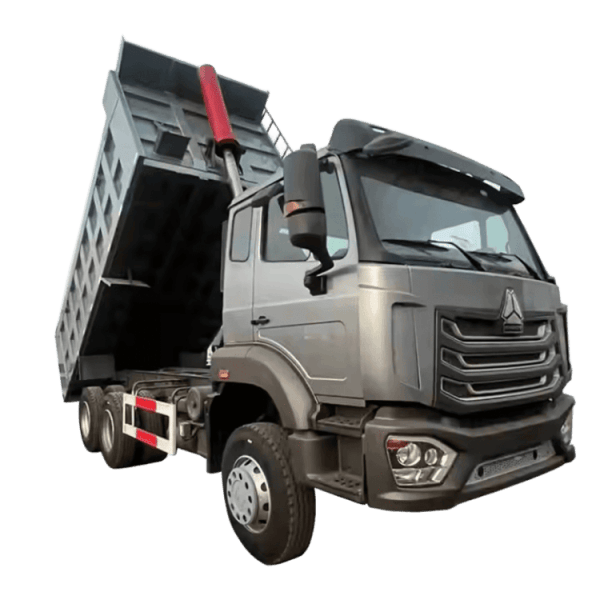
Industrial Remanufacturing Gives Heavy Trucks a Second Life
Industrial remanufacturing is essentially the reshaping and rebirth of vehicle life. It does not simply repair faults or modify appearance, but resets mechanical precision, rebuilds system performance, and renews the full life cycle of retired heavy trucks. Only OEM-level industrial remanufacturing can achieve true life reshaping. It enables old vehicles to regain new-truck performance, continue industrial value, and provide global fleets with longer-life, lower-cost and greener heavy transport solutions.
Table of Contents
- The Essential Difference: Repair Extends Usage, Remanufacturing Reshapes Life
- How Remanufacturing Reshapes the Life of Heavy Trucks?
- Industrial Remanufacturing Creates Multi-Cycle Industrial Life
- Practical Value of Life Reshaping for Fleet Operation
- Industrial Significance: Remanufacturing Is Life-Cycle Industrial Ecology
- REMAN ROAD: Brand Positioning, Core Standards & Development Vision
Related Articles
- Core Essence of Remanufacturing: Full Restoration to OEM Original Performance
- What Defines a True Reman Truck?
- Why Remanufactured Trucks Are the Future of the Heavy Truck Industry?
- Industrial Remanufacturing Resets the Full Vehicle Life Cycle
- The Circular Economy Value of Truck Remanufacturing
- ESG and Compliance Value of Reman Trucks: Meeting Global Sustainable Standards
The Essential Difference: Repair Extends Usage, Remanufacturing Reshapes Life
Traditional maintenance and cosmetic refurbishment only delay vehicle failure and prolong temporary usability. They cannot reverse mechanical aging, eliminate performance attenuation, or reset the vehicle’s life cycle.
Genuine industrial remanufacturing completely breaks the aging trajectory of used trucks, reshapes the whole machine’s mechanical state, and realizes a true life rebirth.
Ordinary Maintenance Cannot Reverse Aging Decay
- Daily repairs only replace broken parts and fix visible faults.
- Most hidden wear, metal fatigue, tolerance deviation and system coordination decline remain untreated.
- The vehicle continues aging rapidly, with declining power, rising fuel consumption and unstable safety performance.
Refurbishment Only Changes Appearance, Not Life State
- Painting, cleaning and partial renovation can make old trucks look new visually, but they cannot restore mechanical precision.
- Such vehicles are still in an aging life state and will soon return to high-failure operation.
Remanufacturing Resets the Full Vehicle Life Cycle
- True industrial remanufacturing takes OEM performance standards as the benchmark.
- Through full disassembly, precision measurement, component regeneration and system recalibration, it eliminates accumulated mechanical fatigue, restores factory precision, and resets the vehicle’s life cycle to a brand-new state.
How Remanufacturing Reshapes the Life of Heavy Trucks?
Vehicle life reshaping is a systematic industrial regeneration process. It covers mechanical precision restoration, system performance reset, and overall reliability reconstruction, realizing comprehensive life renewal from core to appearance.
Reset Core Mechanical Precision
- Aging trucks lose original factory tolerance accuracy due to long-term load friction and impact.
- Reman screens all components, reprocesses worn parts, and replaces substandard accessories, restoring engine, transmission and axle assembly precision to OEM original levels.
Rebuild Overall System Coordination
- The aging of a single component will cause the overall system matching deviation.
- Industrial remanufacturing recalibrates power output, shifting logic, braking response and hydraulic coordination, making the whole vehicle operate with new-machine synergy and stability.
Eliminate Hidden Fatigue and Potential Failures
- Years of heavy-load operation produce invisible metal fatigue and structural stress.
- Industrial remanufacturing eliminates cumulative hidden dangers through full inspection and regeneration, making the vehicle’s subsequent service life stable and predictable.
Industrial Remanufacturing Creates Multi-Cycle Industrial Life
New trucks only have a single factory life cycle. Reman endows heavy trucks with repeated regenerative capabilities, realizing multi-cycle industrial value and maximizing the utilization of industrial assets.
Break the Single Life Limit of Traditional Vehicles
- Under the linear industrial model, vehicles will be scrapped completely after one life cycle.
- Industrial remanufacturing breaks this rule. Qualified retired heavy trucks can be regenerated multiple times through standardized processes to achieve repeated service renewal.
Realize Zero-Degradation Life Regeneration
- Different from downgraded second-hand usage, OEM-level industrial remanufacturing ensures that each regenerated life cycle has the same performance, safety and reliability as a new truck.
- It achieves zero-degradation life renewal rather than declining repeated utilization.
Maximize the Industrial Value of Vehicle Assets
- The core chassis, frame and high-value components of heavy trucks have far longer theoretical service life than their first-cycle usage.
- Reman activates residual asset value, avoids premature scrapping waste, and releases long-term industrial value of equipment.
Practical Value of Life Reshaping for Fleet Operation
Vehicle life reshaping brings tangible economic and operational advantages for engineering fleets and logistics companies, solving the pain points of short asset life and high renewal cost.
Extend Stable Service Life Equivalent to New Trucks
- Remanufactured trucks obtain a complete new service cycle after life reset.
- They maintain low failure rate, stable fuel economy and consistent working performance, completely matching the operating state of brand-new vehicles.
Reduce Frequent Asset Iteration Pressure
- Multi-life cycle regeneration allows fleets to avoid frequent large-scale vehicle replacement.
- It stabilizes fleet scale, reduces procurement pressure, and realizes long-term stable asset operation with lower capital investment.
Improve Long-Term Asset Residual Value
- Vehicles with reset life cycle and standardized reman records have clearer asset status and more stable residual value.
- Compared with aging trucks with declining life status, reman vehicles have stronger secondary transaction value and asset preservation ability.
Industrial Significance: Remanufacturing Is Life-Cycle Industrial Ecology
From an industrial perspective, industrial remanufacturing is not a single vehicle renovation business, but a life-cycle ecological model for heavy equipment. It leads the industry from linear scrapping to circular rebirth.
Change the Industry’s “Scrap and Rebuild” Logic
- Traditional manufacturing relies on continuous resource exploitation and new production.
- Industrial remanufacturing reshapes the industry into “regeneration and reuse”, forming a greener and more sustainable industrial logic.
Standardize the Whole-Life Management of Heavy Trucks
- With OEM performance as the core standard, industrial remanufacturing establishes complete life cycle management rules for heavy trucks, making vehicle aging, regeneration and reuse standardized, traceable and controllable.
Promote Sustainable Development of Global Transport
- Life reshaping reduces global equipment waste, cuts industrial carbon emissions, and supports ESG sustainable development goals, becoming an indispensable core link in the future heavy truck circular economy system.
REMAN ROAD: Brand Positioning, Core Standards & Development Vision
REMAN ROAD take remanufacturing technology, standardized process system and quality control as the core, and heavy-duty equipment regeneration as the landing carrier, committed to solving the long-standing quality chaos and cost risks in the global engineering equipment renewal market.
Accurate Brand Positioning
- REMAN ROAD is a standard‑oriented industrial remanufacturing enterprise, not a vehicle sales dealer or equipment refurbishment workshop.
- Our core competitiveness lies in defining, practicing and popularizing measurable OEM‑aligned remanufacturing benchmarks, quality evaluation criteria and full‑lifecycle asset management specifications.
- We focus on establishing unified evaluation dimensions for the disordered global heavy‑duty equipment reman sector, guiding the industry away from superficial cosmetic refurbishment and experiential repair models.
- By setting transparent, replicable reman standards, we help global engineering fleets identify qualified regenerated assets, and build a reliable connection between green circular‑economy concepts and practical fleet‑asset value improvement.
Core Brand Principles
- Standardization First, Reject Fake Reman: Always take OEM industrial technical standards as the only implementation basis, completely abandon empirical renovation and superficial refurbishment, and ensure every regenerated unit reaches near-new performance indicators.
- Technology-Driven Regeneration: Rely on professional disassembly, cleaning, fatigue elimination, precision repair and calibration technology to realize essential performance regeneration of industrial equipment, not simple part replacement.
- Full Transparent Quality Traceability: Implement full-process file archiving for all reman projects, realize visible and verifiable restoration process, and solve the information asymmetry pain point in the global second-hand engineering equipment trade.
- Customer Value-Centric: Take reducing fleet full-lifecycle cost, eliminating operational safety risks and improving asset return rate as the core goal, providing stable, reliable and cost-effective reman asset solutions.
Brand Vision & Mission
- Brand Mission: Standardize global industrial equipment remanufacturing, empower global buyers with low-cost, low-risk and high-value circular asset solutions.
- Brand Vision: Become a global benchmark brand for standardized industrial remanufacturing, promote the iterative upgrade of the heavy equipment reman industry from extensive renovation to standardized technical regeneration, and lead the healthy development of the global green circular equipment economy.
- Core Competitive Advantage: REMAN ROAD’s core advantage is standardized industrial reman system. From core vehicle screening, process implementation, performance testing to after-sales guarantee, we form a closed-loop quality system, enabling global customers to obtain new-grade equipment quality at a reasonable cost and truly realize “cost reduction, risk reduction and efficiency improvement.